The Ransom Note That Read Like a Business Case
Maersk confirmed a breach in a warehouse system it bought four years ago. The gang demanding $5 million did the maths out loud — and that's the part worth reading twice.
"Five million dollars is roughly four hours of that EBITDA."
That is not a line from a board meeting. That is the ransom note.
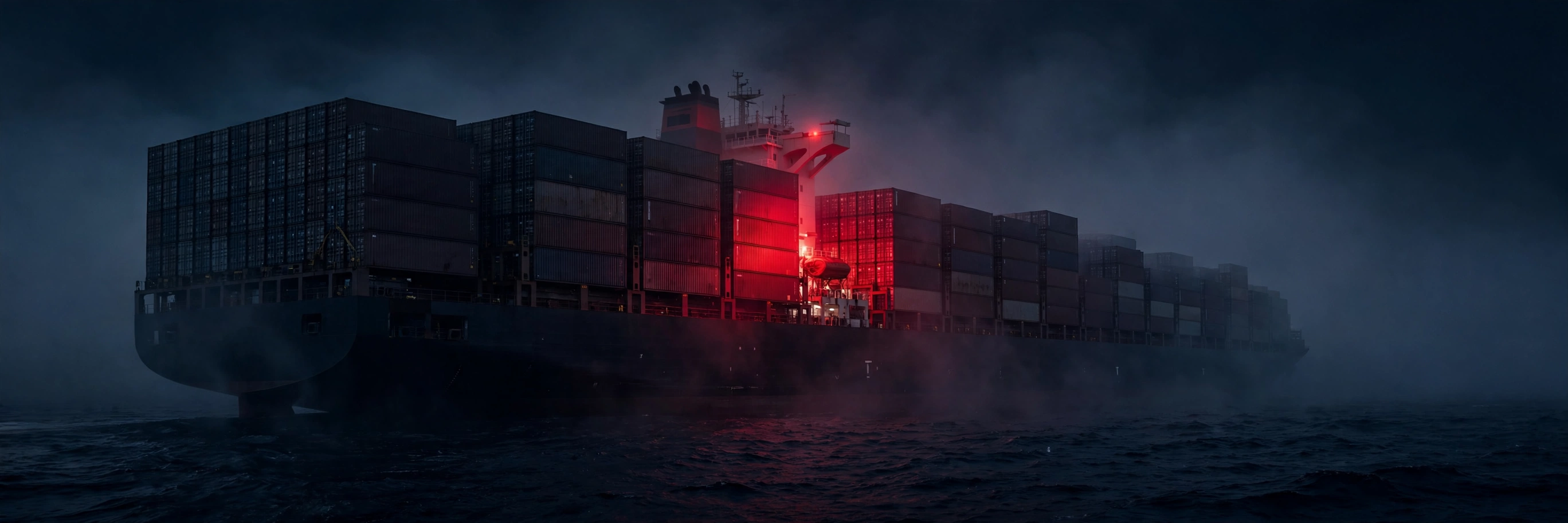
Over the weekend, the WhiteArmor ransomware gang put Maersk — the Danish shipping giant, 700 container ships, roughly an eighth of the world's entire container capacity — on its data leak site. The demand: $5 million in bitcoin, 30 days to pay. And then, almost politely, the gang explained its own pricing. Your contract-logistics arm, it wrote, runs fulfilment for many of the world's largest consumer brands. Five million dollars is roughly four hours of that profit.
On Wednesday, Maersk confirmed the breach.
The company's own advisory, published on 11 November, is short and careful. An attacker got unauthorised access to one local legacy system from a previous acquisition and extracted data from it. The system has been secured, a full investigation is ongoing, and — in the company's words — current findings "strongly suggest no sensitive data has been disclosed." The incident is isolated, Maersk says, with no sign of impact on its other systems or on the customer and partner systems that connect through its APIs and electronic data interchange. Bookings carry on as usual.
That is what is confirmed. Everything else is a claim, and the two sides do not match.
WhiteArmor says it holds about 100GB taken from the OCF/LF Logistics platform — the system of Maersk's contract-logistics arm — and it published a shopping list to prove it: nearly 30,000 driver records, plaintext passwords, 33 SUPER_ADMIN accounts, signed delivery receipts, millions of inventory rows tied to purchase orders and shipping notices, and 27,842 mobile device logs carrying phone numbers, email addresses and IMEI numbers. None of it has been confirmed by Maersk. The company has not said what data was taken, when the intrusion began, or whether WhiteArmor is even the group behind it.
Read those two versions side by side and you can feel the gap. One side says "no sensitive data disclosed." The other side is holding up a list that includes plaintext passwords and the most privileged accounts on the system. One of them is wrong, or both are describing different corners of the same break-in. That gap is the story — not the ransom figure.
Because the system at the centre of it is not really Maersk's. Not originally.
LF Logistics was a Hong Kong warehousing and contract-logistics business. Maersk bought it from the Li & Fung Group in 2022 for $3.6 billion, and with it came the OCF platform — the software that runs the warehouses, the drivers, the deliveries. Four years later, somebody walked in through that system.
This is the part I keep coming back to, and I'm still a student — PNY Batch 58, cybersecurity — so I say it as a learner, not an expert: when you buy a company, you don't just buy its warehouses and its customers. You buy its passwords. Its old admin accounts. Its forgotten systems, the ones nobody has fully mapped because they were somebody else's problem until the day the deal closed. A legacy system is not a filing cabinet. It is a door, and it opens from the outside exactly like any other door.
Maersk has been here before, and that history makes this one land differently. In 2017, the NotPetya ransomware tore through the company so completely that it had to rebuild more than 4,000 servers and 45,000 workstations from scratch, operating without IT for ten days, at a cost of up to $300 million. That was a catastrophe. This one, by contrast, was caught, contained, and announced within days, with the ships still sailing. The difference between 2017 and 2026 is not that attackers stopped trying. It is that this time the breach hit one old system on the edge — and the edge held.
But "held" is doing a lot of work there. Maersk's own language gives it away: "strongly suggest" is not "confirmed." An investigation that is still open can still change its mind. And the gang's 30-day clock is still ticking while that investigation runs.
So what does this one actually teach?
First, audit what you acquire like it's production — because it is. A system inherited in a deal deserves the same scrutiny as the one you built yourself, and usually more, because you didn't choose its passwords.
Second, "legacy" is a risk label, not an excuse. The older a system is, the more likely it is to hold the kind of data nobody remembers — driver records, device logs, admin accounts created years ago and never reviewed.
And third, keep the two columns separate. What the company confirmed: unauthorised access, data extraction, one legacy system, no wider impact found so far. What the gang claims: 100GB, 30,000 drivers, plaintext passwords, 33 super-admin accounts. The first column is the floor. The second is a threat, and threats are marketing until somebody proves them.
The ransom note was the most honest document in the whole story. It told Maersk exactly what its old system was worth — to the wrong people. Four hours of profit. The question now is whether the company agrees with that valuation, or whether the next thirty days prove it wrong.
Comments
Join the discussionNo comments yet. Be the first to comment.